A dryer wall box is the metal housing installed in an exterior wall that lets your dryer exhaust duct pass through safely and vent lint and hot air outside. Without one, ducts get crushed, lint collects behind the wall, and fire risk climbs. This guide explains what a dryer wall box does, when to replace one, and how professional installation keeps your laundry area safer.
Many homeowners in Sebastian and Indian River County only learn they have a damaged wall box after a dryer takes forever to dry clothes or a musty smell shows up near the laundry closet. That delay is common, and it’s fixable once you know what to look for.
📌 Key Takeaways
- A dryer wall box replaces flimsy flexible duct connections at the exterior wall with a rigid, code-compliant housing.
- Crushed or corroded wall boxes are a leading cause of restricted dryer airflow and lint accumulation.
- Professional installation typically costs less than a service call for a duct fire or water-damaged wall.
- Louvered, spring-loaded dampers on a quality wall box keep pests and drafts out between drying cycles.
- Annual inspection catches wall box wear before it becomes a bigger repair.
Table of Contents
- What Is a Dryer Wall Box and Why It Matters
- Signs Your Dryer Wall Box Needs Attention
- Dryer Wall Box vs Standard Vent Hood
- Professional Installation Process
- Cost Factors to Expect
- DIY vs Professional Installation
- FAQ
What Is a Dryer Wall Box and Why It Matters
Quick Answer: A dryer wall box is a rigid metal duct fitting mounted flush inside an exterior wall so the dryer duct connects at a right angle instead of bending sharply behind the appliance. It reduces lint traps and keeps the dryer only inches from the wall.
Standard flexible duct connections force dryers to sit several inches away from the wall, which wastes laundry room space and creates sharp bends where lint collects. A dryer exhaust wall box solves this by recessing the connection point into the wall cavity itself.
This matters because trapped lint is flammable. According to the U.S. Fire Administration, failure to clean dryer vents is one of the most common causes of home dryer fires each year. A properly installed wall box, paired with routine cleaning, reduces that risk significantly.
Why Builders Skip This Detail
In many older Florida homes, builders installed dryers with a basic elbow fitting instead of a true wall box. It works initially, but the flexible duct sags and kinks over time, cutting airflow. We see this constantly on service calls in Sebastian and North St. Lucie County.
💡 Expert Insight: If your dryer sits more than 4 inches from the wall, there’s a good chance you have an outdated elbow setup instead of a proper dryer duct wall box.
Signs Your Dryer Wall Box Needs Attention
Quick Answer: Longer dry times, a burning smell, visible dents in the exterior vent cover, or a damper that won’t close are the clearest signs your wall box needs service. Ignoring these signs raises both energy costs and fire risk.
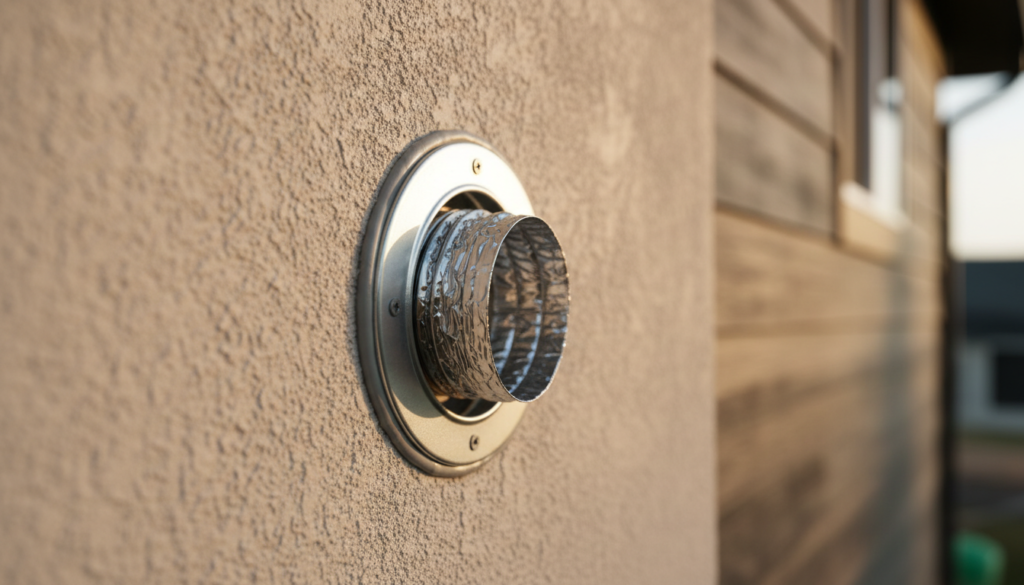
A dryer vent wall box takes a beating from weather, pests, and lawn equipment over the years. Dents from a stray weed trimmer or a bird nest built inside the louvers can quietly choke airflow without any obvious symptom indoors.
| Symptom | Likely Cause | Recommended Action |
|---|---|---|
| Clothes take 2+ cycles to dry | Crushed or clogged wall box | Inspect and clear or replace box |
| Burning smell during drying | Lint packed near wall box | Schedule professional duct cleaning |
| Damper flap won’t close | Rusted hinge or debris | Replace damper or full wall box |
| Pest noise near vent | Damaged or missing screen | Install pest-resistant wall box |
| Visible dents outside | Impact damage | Replace exterior cover |
⚠️ Common Mistake: Homeowners often replace the exterior vent cover alone without checking the wall box behind it, which leaves the actual airflow restriction in place.
When a Reroute Makes More Sense
Sometimes the wall box itself is fine, but the duct routing behind it is the real problem — long horizontal runs through an attic, for example. In those cases, an attic dryer vent reroute paired with a new wall box solves the airflow issue at the source rather than just patching a symptom.
Dryer Wall Box vs Standard Vent Hood
Quick Answer: A standard vent hood mounts directly to the exterior siding with a flexible connection running loosely behind the dryer, while a wall box recesses into the wall for a tighter, straighter path. The wall box option generally performs better and lasts longer.
A basic vent hood is cheaper up front but leaves more slack duct exposed to kinks. A dryer exhaust wall box, by contrast, creates a dedicated cavity that holds the duct connection rigid and close to the wall.
📊 Data Point: The National Fire Protection Association reports that clothes dryers and washing machines are involved in thousands of home structure fires annually in the U.S., with failure to clean as a top contributing factor — a risk that a properly sealed wall box helps reduce by limiting lint accumulation points.
Materials That Hold Up in Florida Climates
Humidity and salt air along the Treasure Coast accelerate corrosion on cheap galvanized fittings. We generally recommend aluminum or heavier-gauge steel wall boxes with sealed seams for homes near Sebastian and the coastal parts of Indian River County.
Professional Installation Process
Quick Answer: Installing a dryer wall box involves cutting an opening in the exterior wall, mounting the box, connecting rigid duct, sealing gaps, and testing airflow. The whole process usually takes under two hours for a straightforward replacement.
Here’s the general sequence a technician follows:
- Shut off the dryer and disconnect the existing duct connection.
- Measure and cut the wall opening to match the new box dimensions.
- Mount the wall box, securing it to wall studs where possible.
- Connect rigid or semi-rigid metal duct from the dryer to the box.
- Seal all seams with foil tape rated for dryer exhaust, never standard cloth tape.
- Test the damper flap and confirm full airflow with the dryer running.
✅ Quick Tip: Ask whether the replacement includes a pest-resistant damper screen — it’s a small upgrade that prevents future nesting issues.
Why Sealing Technique Matters
A loose seam at the wall box connection lets warm, moist air escape into the wall cavity instead of outside. Over months, that moisture can support mold growth inside the wall. Proper foil-tape sealing, not standard duct tape, is required by most current mechanical codes referenced by the International Code Council.
Homes near roof-mounted terminations sometimes need a different approach entirely. If your duct runs up rather than out, our roof and wall termination services cover both configurations.
Cost Factors to Expect
Quick Answer: Dryer wall box replacement cost depends on wall material, duct length, and whether a full reroute is needed. Simple swaps cost far less than jobs requiring stucco or brick repair around the opening.
| Factor | Impact on Cost |
|---|---|
| Wall material (drywall vs stucco/brick) | Higher for masonry cutting and patching |
| Duct length behind the wall | Longer runs add labor time |
| Existing damage (mold, pests) | Remediation adds to total cost |
| Box material upgrade | Aluminum/heavy-gauge costs more than basic |
| Access difficulty | Tight laundry closets take longer |
Getting a written estimate before work begins protects you from surprise add-ons. Ask specifically whether the quote covers exterior patching, since that’s a common gap in low-ball estimates.
A Real Example From the Field
On a recent call in North St. Lucie County, a homeowner assumed a $60 vent cover would fix slow drying. Once we opened the wall, the actual wall box was crushed flat from an old landscaping impact. Replacing the full assembly, not just the cover, resolved the airflow problem completely.
DIY vs Professional Installation
Quick Answer: A confident DIYer can sometimes replace an exterior vent cover, but full dryer wall box installation involves wall cutting, duct sizing, and code compliance best left to a trained technician.
| Task | DIY-Friendly? | Notes |
|---|---|---|
| Cleaning the exterior louver | Yes | Simple, low risk |
| Replacing exterior cover only | Sometimes | Fine if wall box behind it is undamaged |
| Cutting a new wall opening | Not recommended | Risk of hitting wiring or plumbing |
| Sizing duct diameter correctly | Not recommended | Undersized duct restricts airflow |
| Sealing for code compliance | Not recommended | Requires correct tape and technique |
⚠️ Common Mistake: Using plastic flexible duct behind a new wall box is a fire code violation in most jurisdictions and voids many manufacturer warranties.
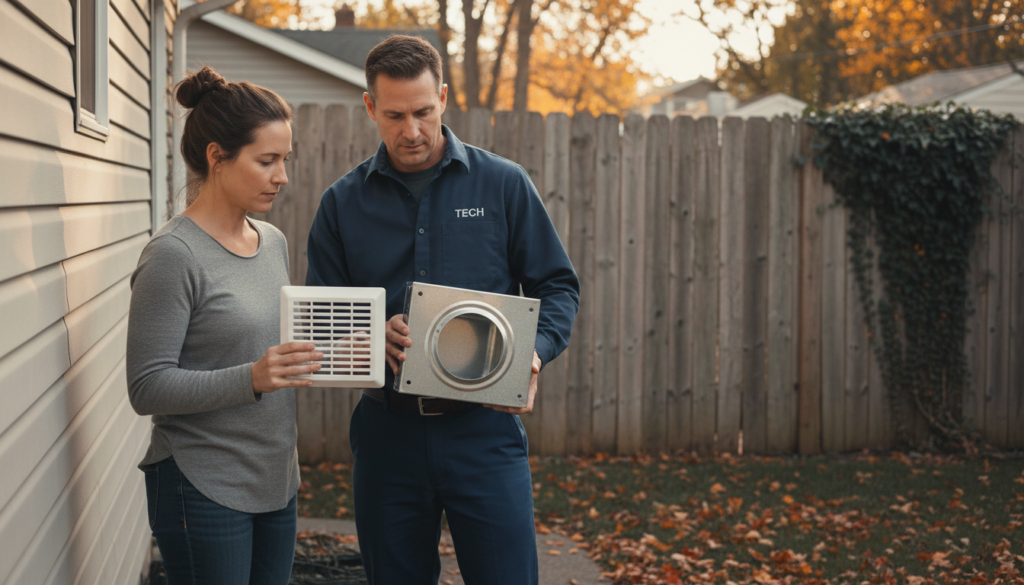
If you’re unsure which category your situation falls into, a quick inspection resolves the guesswork faster than trial and error. Our team handles both dryer vent wall box installation and full duct system checks in one visit.
FAQ
What is a dryer wall box used for?
A dryer wall box provides a rigid, recessed connection point at the exterior wall so the dryer duct runs straight and close to the wall instead of bending loosely behind the appliance. It reduces lint buildup and improves airflow.
How do I know if my dryer wall box is damaged?
Longer drying times, a burning smell, visible dents on the exterior cover, or a damper flap that won’t close fully are the most common warning signs. Any of these warrants an inspection before the next drying cycle.
Can I replace a dryer wall box myself?
Replacing the exterior cover alone is sometimes manageable for handy homeowners, but cutting a new wall opening or resizing duct should be handled by a professional to avoid code violations and hidden wiring hazards.
How much does a dryer exhaust wall box cost to install?
Costs vary based on wall material, duct length, and whether patching or remediation is needed, so an accurate number requires an in-home estimate rather than a flat quote.
Does a dryer duct wall box help prevent fires?
Yes — a properly sealed wall box reduces sharp bends and gaps where lint collects, and organizations like the CPSC note that dryer fires are strongly linked to lint buildup and restricted airflow.
How often should a dryer wall box be inspected?
An annual check is a reasonable baseline for most households, with more frequent checks recommended for homes near landscaping equipment or coastal humidity that accelerates wear.
Is a dryer wall box the same as a vent hood?
No — a vent hood mounts on the exterior surface with a looser interior connection, while a wall box recesses into the wall cavity for a tighter, more code-compliant fit.
Final Thoughts
A dryer wall box is a small component with an outsized effect on drying performance and fire safety. Watching for slow dry times, damaged exterior covers, or a stuck damper helps you catch problems before they become costly. Whether you need a simple inspection or a full dryer wall box replacement, addressing it early protects both your appliance and your home.
- Check your exterior vent cover for dents or debris this week.
- Time a drying cycle to see if it’s taking noticeably longer than usual.
- Schedule a professional inspection if you notice any warning signs above.
- Ask about pest-resistant dampers when replacing an old wall box.
All Clear Vents serves homeowners throughout Sebastian, Indian River County, and North St. Lucie County with dryer vent and wall box services. Contact our team today to schedule your inspection and keep your dryer venting safely.
