If you’re typing "vent repair near me" into your phone right now, chances are your dryer is taking forever to dry a single load, or your clothes smell faintly of burnt lint. That’s not normal, and it’s not something to ignore. A restricted or damaged dryer vent is one of the leading causes of residential fires, and it wastes energy every single cycle it stays broken.
The direct answer: local vent repair services fix crushed ductwork, reroute poorly installed vent lines, replace broken wall boxes, and clear blockages that create dangerous heat buildup. Most jobs take under two hours and immediately restore airflow. In this guide, we’ll walk through the warning signs, what a real repair involves, when DIY is safe, and how homeowners across Sebastian, Indian River County, and North St. Lucie County can get a technician out quickly.
📌 Key Takeaways
- Long drying times and hot dryer exteriors are the two clearest signs you need vent repair now.
- Crushed, kinked, or overly long vent runs cause most airflow problems, not just lint buildup.
- According to the U.S. Consumer Product Safety Commission, clothes dryers are linked to thousands of home fires yearly, many tied to poor venting.
- DIY works for surface lint removal; structural repairs, reroutes, and wall box replacements need a licensed technician.
- All Clear Vents serves Sebastian, Indian River County, and North St. Lucie County with inspection-first repair visits.
Jump To a Section
- Signs You Need Vent Repair Now
- What a Professional Vent Repair Visit Includes
- DIY vs Professional Vent Repair
- Choosing a Local Vent Repair Company
- Cost Factors for Vent Repair Near Me
- Frequently Asked Questions
Signs You Need Vent Repair Now
Quick Answer: Long dry times, a hot dryer exterior, burning smells, and visible duct damage all signal it’s time to search for vent repair near your home. Waiting rarely makes these problems better.
Most homeowners notice something is off before they know exactly what’s wrong. The dryer runs two or three cycles instead of one. The laundry room feels warmer than usual. Lint collects around the exterior vent hood instead of blowing away cleanly.
Airflow Restriction Symptoms
An airflow restriction happens when lint, debris, or a crushed section of duct narrows the path exhaust air needs to travel. This forces the dryer’s heating element to work harder, which raises internal temperatures. Over time, that heat stress cracks components and shortens the appliance’s lifespan.
⚠️ Common Mistake: Many homeowners assume a longer drying cycle just means an older dryer. In reality, it’s often a clogged or damaged vent line that a simple dryer vent repair could fix in under an hour.
Physical Damage You Can Spot
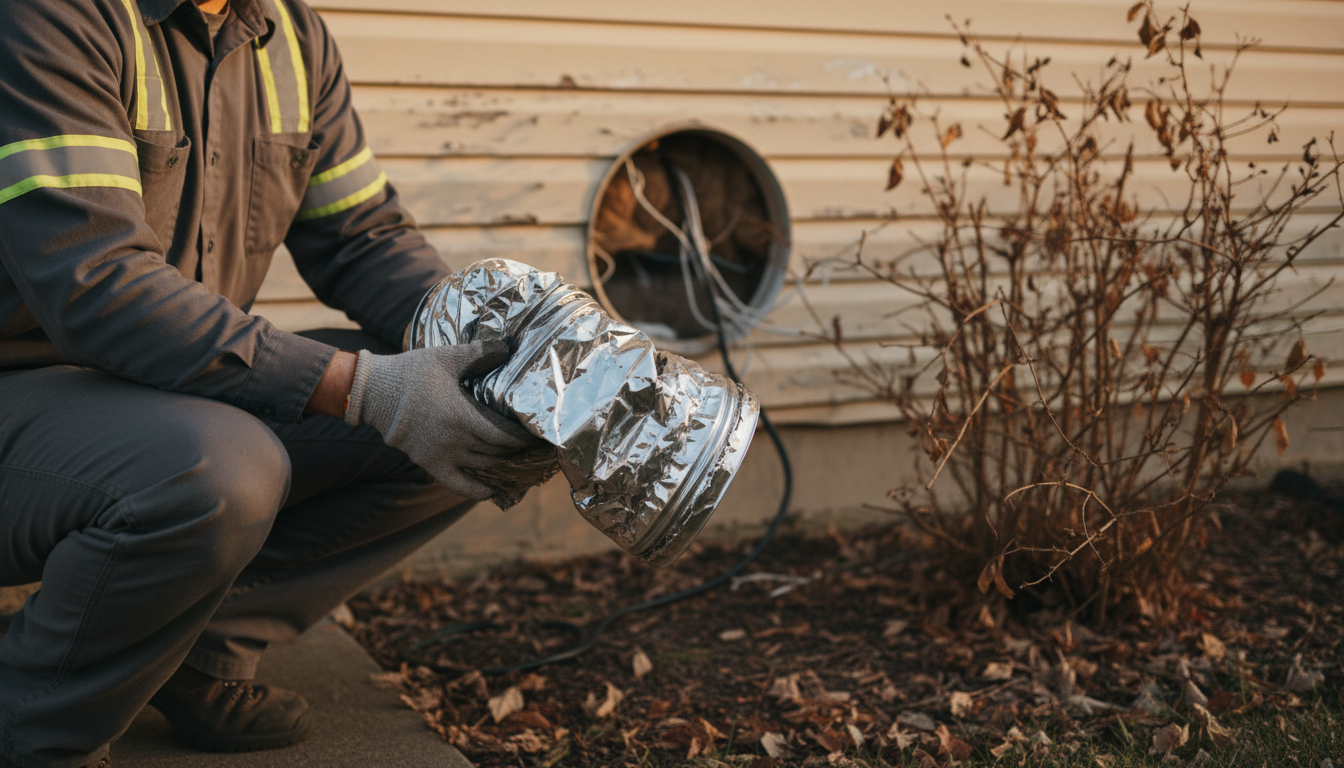
Crushed flexible ducting behind the machine, disconnected joints in the attic, or a vent hood with a broken flap are all visual cues. If you can see daylight through a gap in the ductwork, air (and lint) is escaping into your walls or attic instead of outside.
What a Professional Vent Repair Visit Includes
Quick Answer: A proper visit starts with an inspection, identifies the exact blockage or damage point, and finishes with a functional airflow test before the technician leaves.
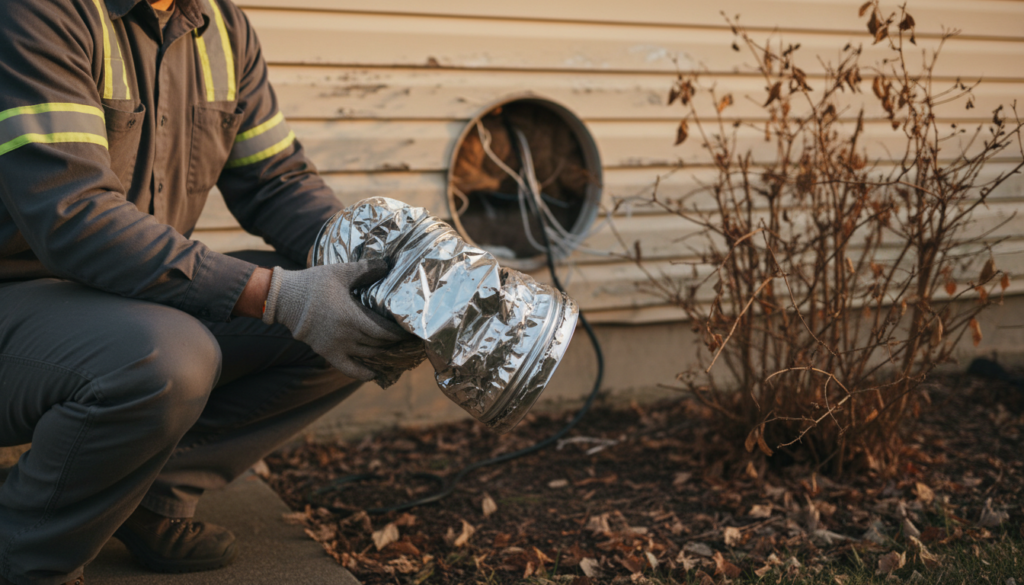
When a technician arrives, the first step is never just grabbing a brush. A qualified vent repair company inspects the full run — from the dryer connection to the exterior termination — to find every restriction, not just the obvious one.
Step-by-Step Repair Process
- Visual and camera inspection of the entire vent run.
- Removal of lint, debris, and any nesting material.
- Replacement or reconnection of damaged duct sections.
- Repair or replacement of crushed elbows and wall boxes.
- Airflow test to confirm proper exhaust velocity.
Some homes need more than a patch job. Attics with long, winding duct runs sometimes require a full attic dryer vent reroute repair to shorten the path and improve airflow permanently. Others just need a new dryer vent wall box because the old one has cracked or the flap won’t close.
💡 Expert Insight: In my experience inspecting older Florida homes, the wall box is one of the most overlooked failure points. Homeowners focus on the visible duct and miss the cracked plastic housing where the vent exits the wall.
Roof and Wall Termination Issues
Some vent systems terminate through the roof rather than an exterior wall. These require specific flashing and cap work to stay weatherproof. Our roof and wall termination service addresses leaks and improper cap installation that standard duct repair won’t fix.
📊 Data Point: The National Fire Protection Association reports that failure to clean is a factor in a large share of home clothes dryer fires, underscoring why regular inspection matters as much as reactive repair.
DIY vs Professional Vent Repair
Quick Answer: DIY lint removal is fine for surface maintenance, but structural repairs, reroutes, and roof terminations should go to a licensed technician for safety and code compliance.
It’s tempting to grab a vacuum attachment and call it done. That’s genuinely useful between professional visits, but it doesn’t address bent ductwork, disconnected joints in the attic, or a failing wall box.
When DIY Is Reasonable
Pulling visible lint from the dryer’s lint trap and the first few feet of accessible duct is safe for most homeowners. A flexible brush kit can extend that reach slightly without disassembling anything.
When to Call a Technician
Anything involving attic access, roof penetrations, exterior wall cutting, or gas dryer connections calls for a professional. Improper reconnections can leak exhaust gases or create fire hazards that aren’t visible until it’s too late.
| Task | DIY Homeowner | Licensed Technician |
|---|---|---|
| Lint trap cleaning | Yes, weekly | Not needed |
| First 3 feet of duct | Yes, with brush kit | Optional |
| Full duct run inspection | Not recommended | Yes |
| Crushed or kinked duct repair | No | Yes |
| Wall box replacement | No | Yes |
| Roof/wall termination work | No | Yes |
| Gas dryer vent disconnection | No | Yes |
✅ Quick Tip: Set a reminder to check your outside vent hood every three months. If the flap won’t move freely in the breeze, that’s an early sign airflow is restricted somewhere upstream.
Choosing a Local Vent Repair Company
Quick Answer: Look for a company that inspects before quoting, explains the exact cause of the problem, and services your specific area rather than a vague regional radius.
Not every company that shows up under "vent repair near me" actually specializes in venting. Some are general handyman services that treat it as an add-on. A dedicated vent technician brings camera inspection tools and duct-specific parts on every truck.
Questions Worth Asking
Before booking, ask whether the technician will show you the blockage or damage point, whether the quote includes a full airflow test, and whether they carry the specific fittings needed for wall boxes and roof caps. Vague answers are a red flag.
Local Coverage Matters
All Clear Vents provides all vent services across Sebastian, greater Indian River County, and North St. Lucie County. Homeowners in these areas can book a visit that includes both cleaning and repair in the same trip when needed. You can see our full coverage map on the service areas page.
⚠️ Common Mistake: Hiring the cheapest quote without asking what’s included often leads to a second, more expensive visit later. A thorough vent repair quote should cover parts, labor, and a final airflow check.
Cost Factors for Vent Repair Near Me
Quick Answer: Cost depends on duct length, accessibility, and whether the repair involves a simple reconnection or a full reroute through the attic or roof.
A short, accessible duct repair behind the dryer is naturally less involved than an attic reroute spanning twenty feet with multiple turns. Materials also matter — rigid metal duct costs more than standard flexible duct but performs better long-term.
What Drives the Price Up or Down
Access difficulty is often the biggest factor. A vent hidden behind a finished ceiling or routed through a tight attic space takes longer to reach than one behind an easily moved dryer. Age of the home and prior installation quality also play a role, since older reroutes weren’t always built to current airflow standards.
The Environmental Protection Agency notes that poor exhaust ventilation can also contribute to indoor air quality issues beyond fire risk, including trapped moisture and mold-friendly conditions in laundry areas. That’s another reason a proper repair, not just a patch, pays off over time.
💡 Expert Insight: I’ve seen homeowners spend more over two years on partial fixes than they would have on one complete reroute. Addressing the root cause usually costs less in the long run.

If your property runs commercial dryers, such as a laundromat or multi-unit building, the process looks different. Our commercial dryer vent services cover higher-volume systems that need more frequent inspection due to constant use.
Frequently Asked Questions
How do I know if I need vent repair near me or just a cleaning?
If your dryer takes noticeably longer to dry clothes or the vent hood flap doesn’t open properly, you likely need repair, not just cleaning. A technician can confirm during inspection whether the issue is lint buildup or physical damage.
How much does dryer vent repair typically cost?
Costs vary based on duct length, material, and accessibility, with simple reconnections costing less than full attic reroutes. Getting an on-site quote after inspection is the most accurate way to know your specific price.
Can a damaged dryer vent actually cause a house fire?
Yes, a restricted or damaged vent traps heat and lint near the dryer’s heating element, which the U.S. Fire Administration identifies as a contributing factor in many home dryer fires. This is why prompt repair matters more than convenience.
Is it safe to repair a dryer vent myself?
Surface-level lint removal is safe for most homeowners to do themselves. Structural repairs like reroutes, wall box replacement, or roof termination work should be left to a licensed technician for safety and code compliance.
How often should dryer vents be inspected in Florida homes?
Most homes benefit from an annual inspection, though households running dryers daily or with pets that shed heavily may need checks every six months. Humid coastal air can also accelerate lint compaction inside ductwork.
Do you offer vent repair near me if I live in Sebastian or Indian River County?
Yes, All Clear Vents provides inspection and repair services throughout Sebastian, Indian River County, and North St. Lucie County. You can check specific coverage details on our Sebastian service area page.
What’s the difference between a vent reroute and a standard repair?
A standard repair fixes or replaces a specific damaged section, while a reroute changes the entire duct path to shorten it or remove excessive turns. Reroutes are often recommended when a home’s original installation was never built to current airflow guidelines.
Final Thoughts and Next Steps
A slow-drying dryer or a hot laundry room isn’t just an inconvenience — it’s a sign your vent system needs attention. Searching for vent repair near me is the right first move, but knowing what a thorough repair actually involves helps you avoid a cheap, temporary fix. From crushed ductwork to failing wall boxes, most issues are fixable in a single visit when handled by an experienced technician.
Here’s how to move forward:
- Check your dryer for the warning signs covered above (long cycles, heat, burning smell).
- Look at your exterior vent hood to see if the flap moves freely.
- Decide if the issue seems like simple lint buildup or structural damage.
- Contact a local, specialized technician for an inspection rather than a generic handyman.
- Schedule the repair before the next drying cycle to reduce fire risk.
All Clear Vents proudly serves homeowners and businesses across Sebastian, Indian River County, and North St. Lucie County with dedicated inspection and repair visits. Reach out through our contact page to schedule your vent repair appointment today.
