Dryer duct cleaning Crystal River homeowners search for usually starts after a load of laundry takes twice as long to dry. That warning sign almost always points to lint packed inside the exhaust duct, and it’s more than an inconvenience — it’s a documented fire hazard. According to the U.S. Consumer Product Safety Commission, clothes dryers cause thousands of home fires every year, and lint buildup is the leading cause.
A clogged duct traps heat, forces your dryer to work harder, and raises your energy bill month after month. Regular professional cleaning clears the pathway, restores airflow, and reduces the chance of an overheated system igniting trapped lint. This guide explains the warning signs, the cleaning process, cost differences between DIY and professional service, and how often you actually need it.
📌 Key Takeaways
- Dryer vents should be cleaned at least once a year, more often for large households.
- Longer drying times and a hot laundry room are the two most common warning signs.
- Professional duct cleaning uses rotary brushes and vacuum extraction, not just a household broom handle.
- Lint buildup is a top cause of residential dryer fires, per the CPSC.
- Bird nests, crushed flex duct, and long vent runs all speed up clogging.
In this article:
- Why Duct Cleaning Matters for Fire Safety
- Warning Signs Your Dryer Vent Needs Attention
- What Professional Cleaning Actually Involves
- DIY vs Professional: What’s the Real Difference
- How Often You Should Schedule Cleaning
- Choosing a Trusted Local Vent Cleaning Company
- FAQ
Why Dryer Duct Cleaning Crystal River Homeowners Can’t Skip
Quick Answer: Dryer duct cleaning Crystal River residents rely on removes trapped lint before it becomes a fire fuel source and restores normal drying times. Skipping it doesn’t just waste energy — it raises real safety risk.
Lint is highly combustible. When it accumulates inside a duct, it sits directly against a heat source every time you run a load. The National Fire Protection Association has tracked dryer-related fires for decades and consistently lists failure to clean as the top contributing factor.
The Hidden Cost of a Clogged Vent
A blocked duct forces the dryer’s heating element to run longer and hotter to finish a cycle. That extra strain shortens the appliance’s lifespan and quietly inflates utility bills. Homeowners often assume the dryer itself is failing when the real problem is a restricted vent.
💡 Expert Insight: In my experience inspecting vents across coastal Florida homes, the most severe blockages show up in houses with long duct runs through attics — heat and humidity accelerate lint compaction faster than in a simple wall-vented setup.
Warning Signs Your Dryer Vent Needs Cleaning
Quick Answer: Longer drying cycles, a hot dryer or laundry room, a burning smell, and visible lint around the vent hood all signal it’s time to schedule service.
Most homeowners ignore the early signs because clothes still technically dry — just slower. That delay is the clearest indicator of a restricted exhaust path.
Five Signs to Watch For
- Clothes take two or more cycles to fully dry.
- The dryer or laundry room feels noticeably hot during use.
- You smell a faint burning odor when the dryer runs.
- The outside vent flap barely opens or stays shut.
- Lint collects around the exterior vent cover more than usual.
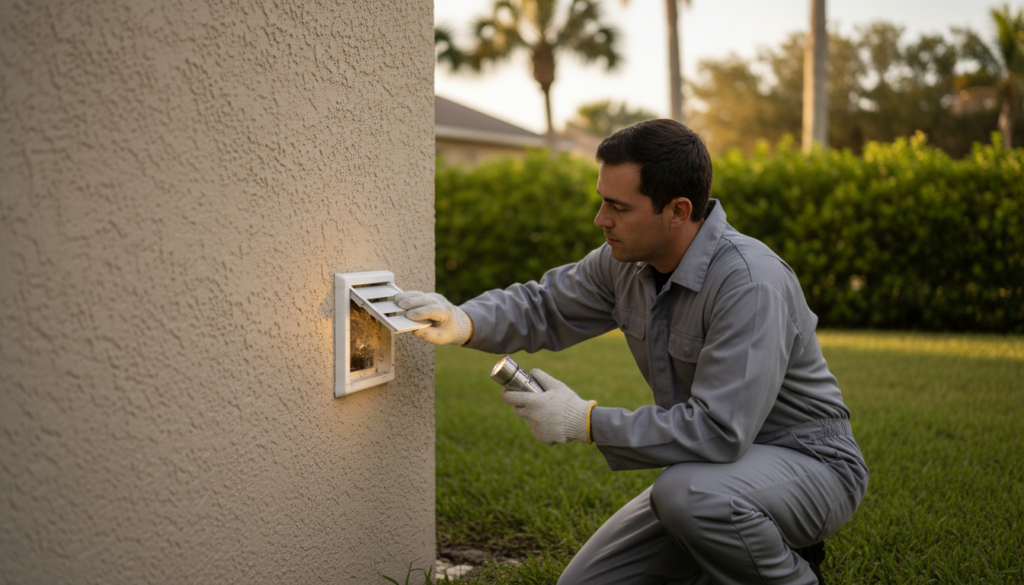
⚠️ Common Mistake: Many homeowners clean only the lint trap and assume that’s enough. The trap catches a fraction of lint — the rest travels down the duct and settles in bends, joints, and the exterior hood.
What Professional Dryer Duct Cleaning Involves
Quick Answer: A professional service uses rotary brushes, high-powered vacuum extraction, and a full inspection of the duct run, wall box, and exterior termination — not just a quick brush pass.
A technician typically disconnects the dryer, runs a motorized brush through the entire duct length, and vacuums loosened lint from both ends simultaneously. This clears sections a homeowner’s vacuum attachment simply can’t reach.
Inspecting the Full Vent System
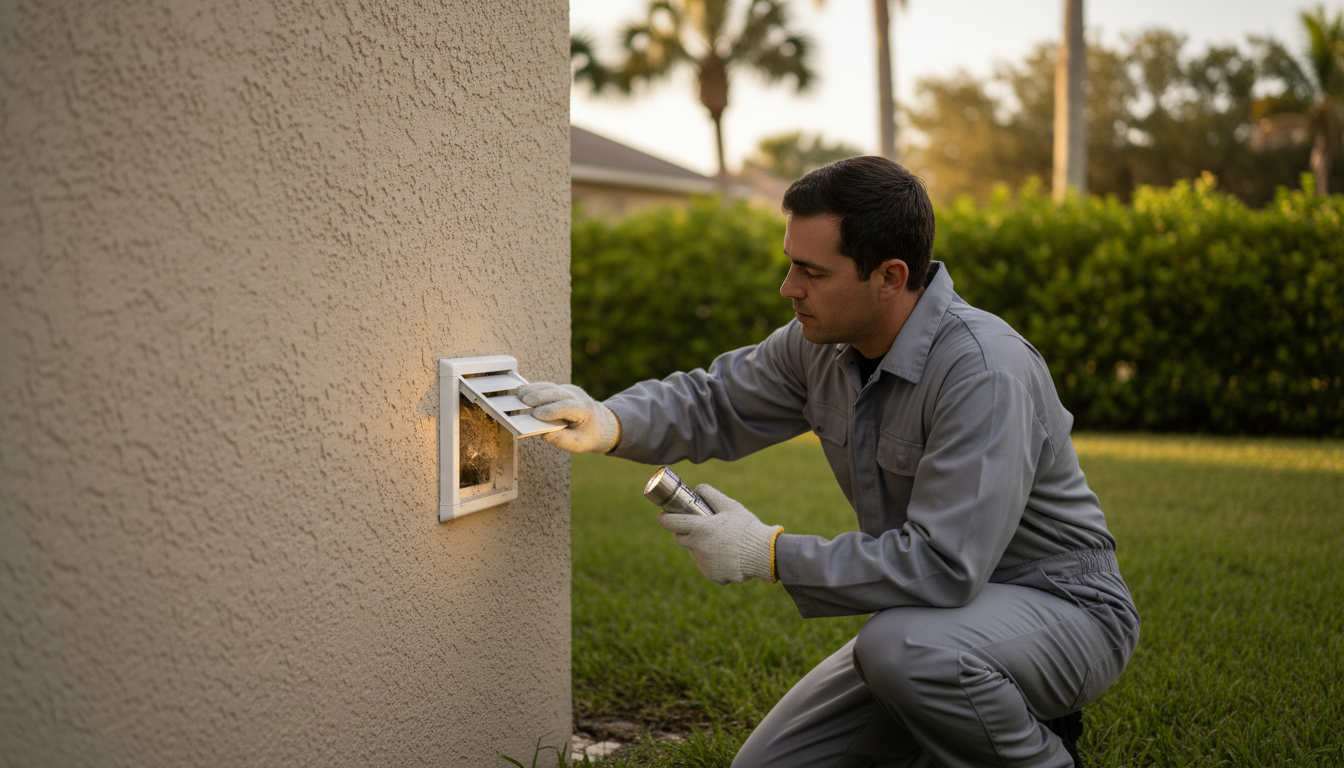
Cleaning isn’t only about the straight duct run. Technicians also check the dryer vent wall box for crushed connections and inspect roof or wall terminations for bird nests, debris, or damaged flapper vents. A duct that looks clear inside a wall can still be blocked at the termination point outside.
📊 Data Point: The U.S. Fire Administration reports that failure to clean dryers is the leading factor contributing to home clothes dryer fires — a preventable cause tied directly to vent maintenance.
Homes with attic-routed ducts sometimes need more than a standard cleaning. If a duct run is crushed, too long, or improperly sloped, an attic dryer vent reroute may solve recurring clogs permanently rather than treating the same symptom every year.
DIY vs Professional Duct Cleaning: What’s the Real Difference
Quick Answer: DIY tools reach only a few feet into the duct, while professional equipment clears the entire run and verifies airflow at the exterior vent — a meaningful safety difference, not just convenience.
A long flexible brush from a hardware store can help between professional visits, but it rarely reaches bends or a duct longer than 10-15 feet. Professional-grade rotary brushes and vacuum systems are built for full-length clearing.
Comparing the Two Approaches
| Factor | DIY Cleaning | Professional Service |
|---|---|---|
| Reach | 3-10 feet typically | Full duct length, including bends |
| Equipment | Basic brush kit | Rotary brush + vacuum extraction |
| Inspection | Visual only | Wall box, termination, and airflow check |
| Time | 30-60 minutes | 45-90 minutes with full inspection |
| Risk of missed blockage | Higher | Lower |
✅ Quick Tip: If your duct run is short and straight, a periodic DIY brush pass between professional visits can help maintain airflow — just don’t treat it as a substitute for annual inspection.
How Often Should You Schedule Duct Cleaning Services
Quick Answer: Most households need dryer duct cleaning once a year; larger families, pet owners, and homes with long duct runs often need it every six to nine months.
Usage frequency, duct length, and household size all affect how fast lint accumulates. A family of five running multiple loads daily will clog a vent far faster than a single-occupant home.
Factors That Shorten the Interval
Homes with pets shed more fiber into the dryer, and older ducts with plastic or foil accordion-style connections trap lint more easily than smooth rigid duct. As of 2026, many building codes recommend rigid metal duct specifically because it resists buildup better than flexible material.

💡 Expert Insight: I’ve seen households cut their drying time nearly in half after their first professional cleaning simply because years of buildup had never been fully addressed.
Choosing a Trusted Local Vent Cleaning Company
Quick Answer: Look for a company that inspects the full vent system, explains findings clearly, and offers documented photos or before/after evidence — not just a quick trap cleanout.
A reputable technician should walk you through the condition of your wall box, duct material, and exterior termination before recommending repairs. Transparency matters more than a low price alone.
Questions Worth Asking Before You Book
Ask whether the company services your specific duct configuration, including roof and wall terminations, and whether they handle both residential and commercial dryer vent systems if you manage a multi-unit property. Our team also covers nearby communities including Sebastian, Vero Beach, and North St. Lucie County, detailed further on our service area page.
⚠️ Common Mistake: Choosing a provider based solely on the cheapest quote can mean a surface-level cleaning that skips the exterior termination — exactly where blockages often hide.
For a deeper look at how this service works in a nearby market, our Sebastian FL duct cleaning guide breaks down the same process step by step.
FAQ
How much does dryer duct cleaning cost?
Pricing varies by duct length, accessibility, and whether repairs like a damaged wall box are needed. Most standard residential cleanings fall within a moderate one-time service fee, with added cost for attic reroutes or termination repairs.
How long does a dryer duct cleaning appointment take?
A typical cleaning and inspection takes 45 to 90 minutes, depending on duct length and how many bends the technician needs to clear. Homes with attic-routed ducts or multiple appliances may take longer.
Can a clogged dryer vent really cause a fire?
Yes. According to the CPSC, lint buildup restricting airflow is a leading cause of residential clothes dryer fires. Reduced airflow traps heat near combustible lint, raising ignition risk significantly.
Is dryer duct cleaning crystal river service available for older homes with flexible ducting?
Yes, flexible or accordion-style duct can be cleaned, though it often needs more frequent service since it traps lint more easily than rigid metal duct. In some cases, replacing flexible duct with rigid material solves recurring clogs long-term.
What’s the difference between vent cleaning and dryer repair?
Vent cleaning addresses the exhaust duct system, while dryer repair fixes the appliance itself, such as the heating element or belt. A clogged vent can mimic appliance failure, so cleaning is often the first step before assuming the dryer is broken.
Do apartment or condo units need duct cleaning services too?
Yes, especially in multi-unit buildings where duct runs are longer and shared walls make access more complex. Property managers should schedule inspections regularly to reduce liability and protect residents.
How do I know if I need duct cleaning services in Sebastian FL versus a full reroute?
If cleaning resolves the issue for less than six months before symptoms return, the duct layout itself — not just lint — may be the problem. A technician can assess whether a reroute or wall box replacement offers a more lasting fix.
Final Thoughts
Dryer duct cleaning Crystal River homeowners schedule regularly isn’t a luxury service — it’s a documented fire-prevention measure backed by CPSC and NFPA data. Longer drying times, a hot laundry room, and visible lint at the exterior vent are all signs it’s overdue. Professional cleaning reaches the full duct length and inspects the system end to end, something DIY tools rarely accomplish.
Next steps:
- Check your dryer’s cycle time and note if it’s increased recently.
- Inspect the exterior vent hood for visible lint or a stuck flapper.
- Schedule a professional inspection rather than waiting for a burning smell.
- Ask about wall box and termination condition, not just duct clearing.
Ready to clear the risk out of your laundry room? Contact our team today to schedule a full dryer vent inspection and cleaning.
